


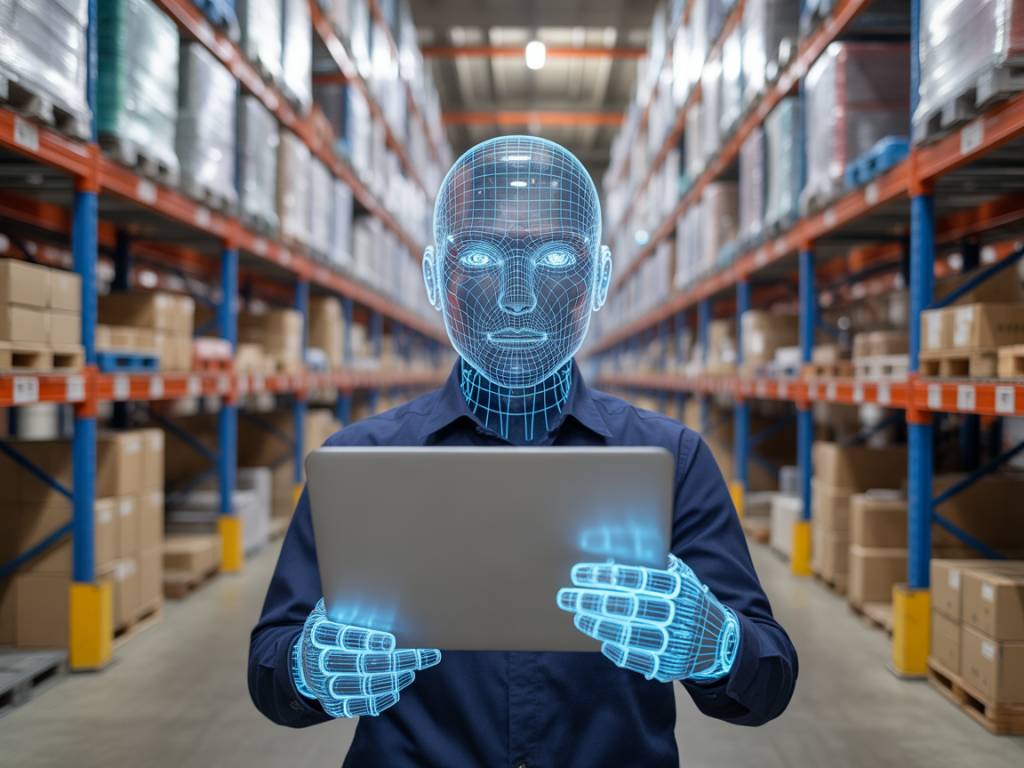
Digital twins are becoming one of the most important technologies in robotics-driven logistics. They allow warehouse operators to create a virtual replica of physical operations, then use that model to simulate, test, and optimize workflows before making changes in the real facility. In environments where speed, accuracy, labor efficiency, and inventory visibility matter every day, this capability is highly valuable. The result is better decision-making, lower operational risk, and a more resilient warehouse strategy.
In modern logistics, automation is no longer limited to isolated robots or standalone software systems. Warehouses now rely on coordinated fleets of autonomous mobile robots, robotic arms, conveyor systems, warehouse management software, and real-time sensor data. A digital twin brings these elements together in one dynamic simulation environment. It reflects how the warehouse operates now, while also showing how it could perform under different scenarios. That makes it a powerful tool for planning, testing, and continuous improvement.
What a Digital Twin Means in Robotics-Driven Logistics
A digital twin is a virtual model of a physical asset, process, or system that is continuously updated using live or near-real-time data. In robotics-driven logistics, the twin may represent an entire warehouse, a specific automation line, or a robotic fulfillment zone. It can include racks, aisles, conveyors, storage locations, autonomous mobile robots, picking stations, packing zones, and even employee movement patterns.
The value of the digital twin lies in its ability to mirror operational reality. Unlike a static simulation, it can be connected to data streams from IoT sensors, warehouse management systems, robotics control software, and inventory databases. This allows logistics teams to monitor performance, identify bottlenecks, and test proposed changes with far greater accuracy than traditional planning methods.
For warehouse automation projects, this means organizations can evaluate robotic routing, order-picking logic, traffic control rules, and storage layouts before implementing them physically. That reduces expensive mistakes. It also improves the speed of innovation.
Why Digital Twins Matter in Warehouse Operations
Warehouse operations are complex. Small changes in layout, order volume, or robot allocation can affect throughput, fulfillment time, and labor requirements. A digital twin helps operators understand those relationships before they become costly problems. It gives logistics teams a controlled environment for experimentation.
This is especially useful when introducing robotics. Autonomous mobile robots, robotic picking arms, and automated storage and retrieval systems can dramatically improve productivity, but only if they are deployed correctly. Poorly designed workflows can create congestion, underused assets, or longer cycle times. Digital twin warehouse simulation helps prevent those outcomes by modeling different operational conditions in advance.
The technology is also useful for responding to demand fluctuations. Seasonal peaks, promotions, new product introductions, and supplier delays can all affect warehouse performance. A digital twin can simulate those pressures and show how robotics systems might behave under heavier loads. That makes capacity planning more reliable and helps operators build operational resilience.
Simulating Warehouse Operations Before Deployment
One of the most practical applications of digital twins is simulation. Before changing a warehouse layout or deploying new robotics, teams can test the impact virtually. This may include simulating travel paths for autonomous mobile robots, evaluating pick-and-pack workflows, or identifying choke points around receiving and shipping areas.
Simulation can answer critical questions. How many robots are needed to support a target order volume? Which storage strategy reduces travel distance the most? Will a new picking zone create congestion near packing stations? What happens when order spikes occur at the same time as equipment downtime? These questions are easier to answer when the warehouse exists as a digital model.
Simulation also supports scenario planning. A logistics team can test multiple outcomes side by side, such as:
Because the model is digital, these tests can happen quickly and safely. There is no interruption to the live warehouse. This reduces risk and allows operations teams to compare options with evidence rather than assumptions.
Testing Robotics Integration in a Virtual Warehouse
Testing is one of the strongest reasons to adopt a digital twin in warehouse automation. Robotics integration often introduces technical and operational complexity. A warehouse may have autonomous mobile robots moving between stations, robotic arms handling repetitive tasks, and machine vision systems making split-second decisions. All of these components must work together smoothly.
A digital twin allows teams to test robotics coordination in advance. They can evaluate whether a robot fleet is balanced correctly across zones, whether traffic rules prevent collisions, and whether robots spend too much time waiting for tasks. They can also test how the system responds when one robot fails or when a conveyor segment stops unexpectedly.
This type of robotics testing is valuable for both new installations and existing warehouses. For new deployments, it supports design validation. For mature operations, it supports ongoing optimization and continuous improvement. The warehouse digital twin becomes a safe space for refining workflows before changes are rolled out in production.
It can also help with vendor evaluation. Companies comparing different robotics solutions can model performance using the same data set, making it easier to compare throughput, utilization, and scalability. That makes procurement decisions more data-driven and more transparent.
Optimizing Throughput, Layout, and Labor Efficiency
Optimization is where digital twins deliver long-term strategic value. Once the virtual warehouse is connected to live operational data, it can reveal patterns that are difficult to see manually. These insights help logistics managers improve throughput, reduce idle time, and allocate resources more effectively.
For example, a digital twin may show that a common pick path creates repetitive congestion near a certain aisle. It may reveal that a robot fleet is underperforming because task assignment rules are not aligned with actual demand patterns. It may also show that inventory slotting can be improved by placing fast-moving SKUs closer to packing stations.
In robotics-driven logistics, optimization often focuses on the following areas:
The benefit is not only higher productivity. Better optimization can also reduce energy consumption, lower equipment wear, and improve worker safety. Over time, those gains can translate into lower operating costs and stronger service levels.
How Real-Time Data Improves Digital Twin Accuracy
A digital twin is most effective when it is powered by accurate, timely data. In logistics environments, that data may come from RFID tags, IoT sensors, warehouse execution systems, robotics controllers, cameras, and inventory databases. The more complete the data flow, the more realistic the simulation becomes.
Real-time visibility helps the digital twin reflect current conditions rather than outdated assumptions. If a robot slows down, a dock becomes congested, or an inventory zone fills up faster than expected, the model can capture that change and adjust accordingly. This makes the digital twin more than a planning tool. It becomes an operational intelligence layer.
This data-driven approach is especially important in large warehouses with multiple automation systems. A disconnected view of operations can hide inefficiencies. A connected digital twin brings those systems into one unified model, helping managers understand how local issues affect overall performance.
Use Cases Across Warehouse and Fulfillment Environments
Digital twins in robotics-driven logistics are used across many types of warehouse operations. E-commerce fulfillment centers use them to improve order throughput and reduce picking time. Third-party logistics providers use them to maximize flexibility across multiple clients. Manufacturing warehouses use them to align parts flow with production schedules. Cold storage facilities use them to manage tight space constraints and time-sensitive inventory movement.
In each case, the goal is similar. Operators want to improve efficiency without disrupting service. A digital twin provides a realistic test environment for doing that. It supports better warehouse design, smarter robot deployment, and more informed decisions about automation investment.
It can also support after-sales optimization for products related to warehouse automation, such as sensors, robot components, control systems, and industrial software platforms. Buyers who want to compare solutions can use digital twin output to understand how a product may perform in an actual logistics environment.
Challenges and Considerations Before Implementation
Despite its benefits, digital twin implementation requires planning. The model must be accurate, the data must be reliable, and the operational goals must be clearly defined. A digital twin is only as useful as the information it receives. If the warehouse processes are poorly documented or if the data is incomplete, the simulation may produce misleading results.
Integration can also be complex. Connecting robotics systems, warehouse management platforms, and IoT devices may require technical expertise and careful architecture design. Some organizations need to start small, focusing on a single workflow or zone before scaling to the entire warehouse.
There is also a change management factor. Teams need training to interpret simulation results and use them in decision-making. Without that, even a highly advanced digital twin can remain underused. Successful adoption usually combines technology, operational discipline, and strong collaboration between engineering, IT, and warehouse leadership.
The Future of Warehouse Automation and Digital Twin Technology
As robotics-driven logistics continues to grow, digital twins are likely to become standard tools for warehouse design and operations management. Advances in artificial intelligence, edge computing, and machine learning will make these virtual environments even more predictive and adaptive. Over time, the digital twin will likely move from a support tool to a central operational platform.
This shift matters because warehouses are under constant pressure to deliver faster fulfillment, handle more SKUs, and improve efficiency while controlling costs. Digital twins offer a structured way to test ideas before investing capital, helping businesses innovate with greater confidence. They also support a more agile supply chain, where adjustments can be made quickly in response to market changes.
For logistics professionals, the message is clear. Digital twins are not just a trend. They are becoming a practical foundation for simulating warehouse operations, testing robotics integration, and optimizing performance in real-world conditions. As warehouse automation becomes more advanced, the organizations that can see, test, and refine their operations virtually will be better positioned to compete.