


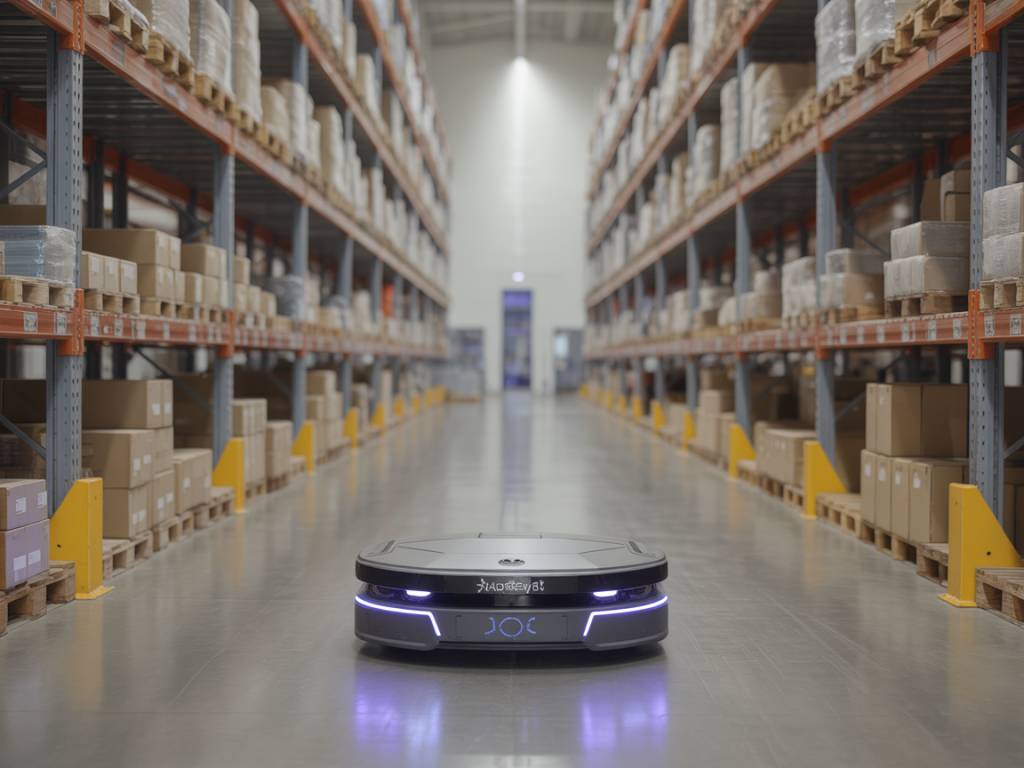
Understanding the Shift from Pilot Projects to Scaled Robotics Deployment in Logistics
Robotics in logistics has moved far beyond flashy demonstrations and isolated proof-of-concept projects. Today, warehouse automation, autonomous mobile robots (AMRs), robotic picking systems and automated sortation are becoming core components of high-performance supply chains. However, many logistics and e‑commerce players still remain stuck in the “pilot project” phase, unable to translate successful tests into scalable, repeatable deployments across multiple sites.
This gap between pilot and scale is not only a technical challenge. It is an operational, organizational and financial challenge that demands a clear roadmap. Implementing robotics in logistics operations requires structured planning, cross-functional governance, realistic ROI models and a strong focus on change management on the warehouse floor.
In this article, we explore a practical roadmap to move from initial pilot projects to full-scale deployment of robotics in logistics, focusing on key success factors, typical pitfalls and concrete steps for supply chain and operations leaders.
Defining Strategic Objectives for Robotics in Logistics Operations
Before investing in any robotics solution, logistics organizations need to clarify why they want automation and what problems they are trying to solve. A robotics project without clear objectives will almost certainly stall after the pilot phase.
Typical strategic objectives include:
- Reducing labor costs and mitigating labor shortages in warehouses and distribution centers.
- Increasing throughput and improving service levels during peak season.
- Enhancing picking accuracy and reducing inventory and shipping errors.
- Improving workplace ergonomics and reducing repetitive strain injuries.
- Enabling more flexible, scalable operations across multiple logistics sites.
These goals should be translated into measurable key performance indicators (KPIs), such as picks per hour, order cycle time, cost per order, error rate or dock-to-stock time. Defining these upfront makes it easier to design meaningful pilot projects and later evaluate whether a robotics solution is ready for scaled deployment.
Mapping Processes and Identifying High-Impact Use Cases
Logistics operations are complex, with many interconnected processes: receiving, put-away, storage, picking, packing, sorting, loading and returns handling. Not all of these processes are equally suitable for robotics and automation, especially in the early stages.
A detailed process mapping exercise helps identify where robotics in logistics will bring the highest impact. Operations leaders should look for processes that are:
- Highly repetitive and standardized.
- Labor-intensive and difficult to staff.
- Critical for throughput (such as picking and sorting).
- Relatively constrained in space, making it easier to control robot movement.
Common high-impact use cases include AMRs for goods-to-person picking, collaborative picking robots, automated sortation for parcels, robotic palletizers and depalletizers, and autonomous forklifts for internal transport. By prioritizing a small number of use cases with clear operational pain points, logistics teams can design pilot projects that are both achievable and meaningful.
Designing a Robotics Pilot Project that Mirrors Real Operations
A robotics pilot that is too small, too isolated or overly “sanitized” will not provide reliable data for scale-up decisions. To build a credible business case, logistics organizations need pilot deployments that mirror real-world conditions as closely as possible.
When designing a pilot project for warehouse robotics or autonomous vehicles in logistics, consider:
- Scope and boundaries: Define a clear area of the warehouse, specific SKUs, and specific shifts that will be automated.
- Volume and diversity: Ensure that the pilot covers different order profiles (B2B, B2C), variable SKU dimensions and fluctuating daily volumes.
- Integration: Integrate the robotics system with the Warehouse Management System (WMS), ERP or Order Management System (OMS) as early as possible.
- Safety and compliance: Implement safety zones, signage, training and incident reporting procedures aligned with local regulations.
- Change management: Involve warehouse managers, team leaders and operators in the pilot set-up and feedback loops.
The pilot should run long enough to capture both ramp-up effects and stable-state performance. Many logistics organizations underestimate the time required for fine-tuning robot routes, optimizing storage layouts or adjusting pick strategies for maximum efficiency.
Measuring Success: KPIs for Robotics in Warehouse and Logistics Environments
Clear, comparable metrics are essential when evaluating robotics in logistics operations. Without them, it is difficult to differentiate between one-time performance gains and sustainable improvements that justify capital expenditure or long-term robotics-as-a-service contracts.
Key KPIs typically monitored during and after pilot projects include:
- Productivity: Picks per labor hour, lines per hour, parcels processed per hour.
- Cost efficiency: Cost per order, cost per pick, labor cost as a share of total logistics costs.
- Quality: Picking accuracy, returns due to errors, damage rates.
- Service levels: Order cycle time, on-time shipping performance, peak season throughput.
- Utilization and uptime: Robot operating time, mean time between failures, maintenance needs.
It is important to compare these KPIs not only to pre-automation baselines but also to realistic benchmarks from similar logistics operations. This helps avoid overly optimistic expectations and provides a grounded view of what robotics can deliver at scale.
Building a Scalable Technology and Integration Architecture
Moving from a single-site pilot to multi-site deployment requires more than adding more robots. It demands a scalable technology architecture that can support multiple facilities and hundreds of robots without creating integration bottlenecks or operational chaos.
Key considerations for scalable robotics integration in logistics include:
- Standardized interfaces: Use APIs and standardized data models between WMS, WES (Warehouse Execution System), robotics fleet management and upstream systems.
- Modular design: Choose robotics solutions that can be expanded with additional zones, workstations or robots with minimal reconfiguration.
- Centralized fleet management: Implement systems that can orchestrate multiple robot fleets across sites, optimizing task allocation and traffic management.
- Cloud vs. on-premise: Evaluate whether cloud-based robotics control and analytics platforms align with IT security, latency and compliance requirements.
- Data and analytics: Design data pipelines to capture robot performance, workflow bottlenecks and energy consumption across all locations.
A scalable architecture not only simplifies deployment but also enables continuous optimization. Over time, organizations can adjust routing algorithms, storage strategies and workforce planning based on data from across their robotics-enabled logistics network.
From Pilot Site to Template: Standardizing Robotics Deployment
One practical strategy for scaling robotics in logistics is to transform the initial successful pilot site into a deployment template. Instead of treating every new facility as a new project, logistics operators can replicate a tested configuration with only minor local adaptations.
This template approach typically includes:
- A standard layout for automated zones (receiving, storage, picking, packing, outbound).
- Predefined hardware configurations (number of robots, workstation design, charging infrastructure).
- Pre-configured software workflows, task priorities and exception handling rules.
- Standardized integration patterns with WMS and other enterprise systems.
- Training modules and documentation for local teams.
Template-based deployment significantly reduces lead time, engineering effort and project risk. It also helps global or regional logistics networks maintain consistent performance and service levels, even when operating in very different markets.
Managing Change on the Warehouse Floor
Robotics in logistics is not only a technology project. It is a deep transformation of daily work on the warehouse floor. Without a strong focus on people, even the best-designed robotics solution can face resistance, under-utilization or operational friction.
Effective change management in logistics robotics projects involves:
- Transparent communication: Explain why robotics is being introduced, what it means for jobs and how employees can develop new skills.
- Involving operators early: Include warehouse supervisors and operators in workflow design, safety assessments and pilot testing.
- Training and upskilling: Provide structured training for robot operators, maintenance technicians and shift leaders.
- New roles and responsibilities: Define roles such as robot coordinator, exception handler or automation champion.
- Continuous feedback: Set up mechanisms for operators to report issues, propose improvements and share practical tips.
When employees see robotics as a tool that supports them rather than replaces them, adoption accelerates. In high-turnover environments such as e-commerce fulfillment, robotics can also make roles more attractive and reduce onboarding time for new staff.
Choosing the Right Commercial Model for Robotics in Logistics
Financing and commercial models play a decisive role when moving from pilot robotics projects to scaled deployment across logistics networks. The traditional capital expenditure (CapEx) approach is no longer the only option.
Today, logistics companies can choose from several models:
- CapEx: Purchase robots and infrastructure outright, with full ownership and responsibility for maintenance.
- Robotics-as-a-Service (RaaS): Pay a monthly or per-transaction fee, with the provider responsible for maintenance, upgrades and sometimes performance guarantees.
- Hybrid models: Combine owned infrastructure with RaaS for additional seasonal capacity.
- Outcome-based contracts: Pay based on KPIs such as throughput or availability, aligning cost with realized value.
The right model depends on capital constraints, risk appetite, forecasting accuracy and how quickly logistics volumes may change. During the pilot phase, many organizations experiment with flexible contracts before committing to long-term deployment agreements.
Scaling Robotics Across a Multi-Site Logistics Network
Once a robotics solution has proven its value in one or two facilities, the question becomes how to scale it systematically across a wider logistics network. This phase introduces new challenges around standardization, governance and continuous improvement.
Key elements of multi-site scaling include:
- Central governance: Establish an automation steering committee or center of excellence to prioritize sites, share best practices and coordinate vendors.
- Site selection criteria: Rank warehouses for deployment based on volume, labor costs, building characteristics and strategic importance.
- Phased rollout: Deploy robotics in waves, starting with sites that closely resemble the pilot environment, then expanding to more complex or constrained warehouses.
- Standard KPIs and dashboards: Monitor performance consistently across all sites to identify outliers and improvement opportunities.
- Vendor ecosystem management: Decide whether to standardize on one robotics provider or build a multi-vendor strategy.
At scale, logistics robotics becomes not just a point solution but a strategic capability. Organizations that manage this transition effectively can gain significant competitive advantages in speed, reliability and cost efficiency.
Future-Proofing Robotics Investments in Logistics Operations
The pace of innovation in logistics robotics—computer vision, AI-based path planning, advanced grippers, and warehouse orchestration software—creates both opportunities and risks. Operations leaders must balance the need for robust, proven technologies with the desire to remain adaptable as new solutions emerge.
To future-proof robotics investments in logistics, companies should:
- Adopt open, modular systems that can integrate with new hardware and software components over time.
- Negotiate upgrade paths and innovation roadmaps with robotics vendors.
- Invest in internal automation and data expertise, not only in external suppliers.
- Use pilots not just for evaluation but also for learning and building internal know-how.
- Continuously reassess network design, facility locations and inventory strategies in light of automation capabilities.
By following a structured roadmap—from clear objectives and robust pilots to scalable architecture and thoughtful change management—logistics organizations can move confidently from experimental projects to large-scale, value-creating deployment of robotics across their operations.