


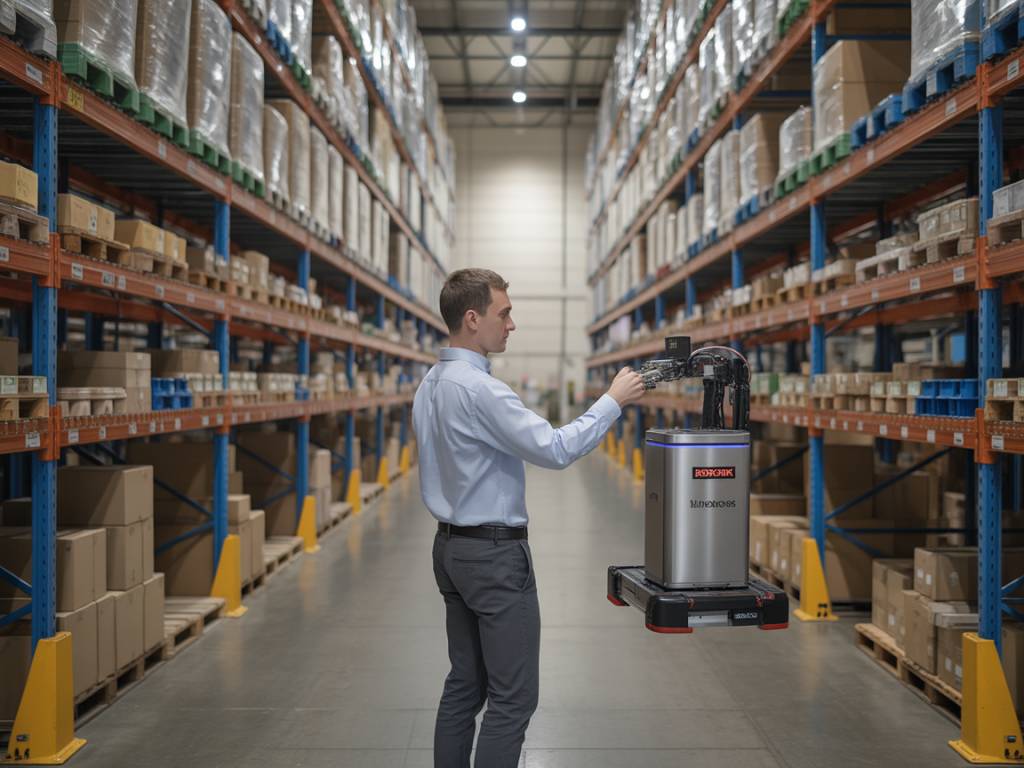
Warehouse automation is evolving. The conversation is no longer only about speed, throughput, and cost per order. Increasingly, logistics leaders are asking a more complex question: how can human-centric warehouse automation improve both productivity and worker well-being at the same time?
Designing robotic systems around ergonomics and health is becoming a strategic differentiator. As labor markets tighten and injury-related costs rise, warehouses that integrate robotics with a clear focus on human factors gain a tangible advantage. They ship faster, attract and retain staff more easily, and create safer workplaces that are better prepared for long-term growth.
Human-Centric Warehouse Automation: From Labor Replacement to Human Augmentation
Traditional warehouse automation projects often focused on replacing manual work outright. Pallet shuttle systems, high-bay automated storage, and fixed conveyor networks were designed mainly for throughput. Human-centric warehouse automation, by contrast, starts from another premise: people remain at the center of operations, and robotics is there to augment them, not sideline them.
In this approach, robotic systems are evaluated not only on payback period or picks per hour, but also on:
- Musculoskeletal load reduction for warehouse workers
- Impact on fatigue, stress, and mental workload
- Quality and consistency of work over a full shift
- Training time and ease of adoption for new staff
- Worker satisfaction and retention over multiple peak seasons
When robotics is framed around human augmentation and ergonomics, design decisions change. The focus moves from pure automation level to collaborative workflows, intuitive interfaces, and continuous improvement of the human–machine interaction.
Why Ergonomics and Worker Well-Being Matter in Warehouse Robotics
Warehouses combine repetitive motion, heavy loads, and time pressure. Left unmanaged, these factors can create a perfect storm for work-related injuries and chronic health issues. Human-centric warehouse automation tackles these risks systematically by using robotics to redesign tasks around the capabilities and limits of the human body.
Key reasons ergonomics now plays a central role in warehouse robotics design include:
- Rising injury costs: Musculoskeletal disorders (MSDs) and repetitive strain injuries drive compensation claims, absenteeism, and turnover. Robots that reduce bending, twisting, and lifting can directly cut these costs.
- Labor scarcity: With fewer people willing to perform physically demanding warehouse work, operations must be more attractive. Ergonomic robotic systems create safer, less exhausting roles.
- Regulatory pressure: Health and safety regulations are tightening in many regions. Deploying robotics with a clear ergonomic focus helps demonstrate compliance and reduces liability.
- Performance over the full shift: Workers who are less fatigued make fewer errors, damage fewer items, and can maintain higher pick rates until the end of the day.
Ergonomic warehouse design used to revolve mainly around racking height, workstation layout, and manual handling equipment. Today, it increasingly includes the fine-tuning of robotic systems, cobots, and autonomous mobile robots (AMRs) to work in harmony with people.
Core Principles of Human-Centric Warehouse Automation
Designing robotic systems around ergonomics and worker well-being rests on several principles. These principles help turn abstract safety objectives into concrete design choices and technology specifications.
- Task redesign before technology: Human-centric automation starts by analyzing tasks and workflows in detail. Only then are robotics and automation technologies selected to eliminate or mitigate high-risk motions, loads, and postures.
- Humans as decision-makers, robots as muscle: People excel at problem-solving, exception handling, and judgment. Robots excel at repetitive, heavy, and precise tasks. Workflows should leverage each strength appropriately.
- Minimization of harmful motions: System layout, pick pod design, and robot interfaces are all assessed based on how they reduce bending, overhead reaching, twisting, and long walking distances.
- Intuitive human–machine interfaces: Touchscreens, wearables, voice picking, and visual cues are designed so that workers do not struggle with complex menus or cryptic signals, lowering mental strain.
- Adaptability to different bodies and abilities: Adjustable workstations, configurable robot speeds, and customizable assist levels help accommodate diverse worker profiles, ages, and physical capacities.
These principles guide everything from high-level automation strategy to small implementation details like handle heights, screen angles, and the arrangement of totes and bins in a goods-to-person station.
Ergonomic Technologies in Human-Centric Warehouse Robotics
Several technologies sit at the heart of human-centric warehouse automation. While they differ technically, they share a common purpose: reduce physical strain while maintaining or increasing throughput.
- Collaborative robots (cobots): Cobots are designed to work safely alongside people. In warehouses, they can support tasks such as order picking, packing assistance, or palletizing. By handling heavy or repetitive motions, they protect workers’ joints and backs while leaving humans in control of sequencing, quality checks, and exceptions.
- Autonomous mobile robots (AMRs): AMRs move tote bins, pallets, or shelves around the warehouse. By taking over horizontal transport, they dramatically cut walking distances and unnecessary lifting. Human operators can stay in an ergonomically optimized pick zone while the robots bring items to them, a core element of goods-to-person systems.
- Robotic palletizers and depalletizers: Stacking and unstacking boxes is a classic source of strain and injury. Modern palletizing robots, equipped with vision systems and smart grippers, can handle mixed SKU pallets and awkward loads, sparing workers from repetitive heavy lifting and overhead reaching.
- Wearable exoskeletons and assistive devices: Passive or powered exoskeletons support the back, shoulders, or arms during lifting and holding tasks. While still an emerging field, exoskeletons can complement other forms of warehouse automation, particularly in areas where full robotic replacement is not yet practical.
- Pick-to-light, voice, and AR-driven picking: Digital picking technologies minimize cognitive load and reduce time spent searching for SKUs. When integrated with ergonomic station design, they can shorten movement paths and limit awkward postures.
A truly human-centric warehouse typically combines several of these technologies in a unified robotics strategy, rather than deploying them as isolated point solutions.
Designing Ergonomic Workstations Around Goods-to-Person Robotics
Goods-to-person (G2P) systems are often presented as productivity engines. Yet they are also powerful ergonomic tools when designed correctly. In a G2P environment, AMRs or shuttle systems bring inventory to a fixed workstation where the operator picks and packs.
To make human-centric automation a reality, the workstation must be carefully designed:
- Optimal reach zones: Bins, screens, scanners, and packing materials should be located within the worker’s primary reach area, reducing excessive stretching and twisting.
- Adjustable height surfaces: Work tables, conveyor in-feeds, and displays should be adjustable to support both sitting and standing positions and accommodate different worker heights.
- Minimized force requirements: Lightweight totes, low-friction surfaces, and ergonomic handles help avoid unnecessary force and grip strain.
- Balanced task variation: Intelligent order allocation can alternate between light and heavier picks, upper and lower reach zones, and different motion patterns to prevent overuse injuries.
- Clear visual ergonomics: Screens and indicators positioned at eye level reduce neck strain, while well-designed lighting reduces eye fatigue.
By combining robot-enabled goods delivery with finely tuned ergonomic stations, warehouses can significantly increase picks per hour without turning the job into a physically punishing routine.
Implementing Human-Centric Warehouse Automation: A Practical Roadmap
Transitioning to ergonomic, human-centered robotic systems is not a single project. It is a staged transformation that blends process redesign, technology deployment, and cultural change.
A practical roadmap often includes:
- Step 1 – Ergonomic risk assessment: Map existing workflows, measure walking distances, lifting frequencies, and postures. Use tools like REBA or RULA assessments, and consult safety specialists.
- Step 2 – Identify high-impact tasks for robotics: Prioritize tasks with repetitive lifting, long carry distances, or awkward body positions. These become primary candidates for AMRs, cobots, or mechanical assists.
- Step 3 – Co-design with operators: Involve warehouse workers in workstation and process design. They can quickly highlight pain points and suggest practical improvements to robot interaction.
- Step 4 – Pilot and iterate: Start with limited deployments of warehouse robotics in a well-defined area. Measure ergonomic and productivity metrics before and after, then adjust speeds, layouts, and task allocations accordingly.
- Step 5 – Scale with training and change management: As robotic systems roll out more broadly, invest in ergonomic training, user education, and clear communication on goals: safer work, better jobs, and sustainable performance.
This phased approach reduces the risk of pushing technology that workers resist or that inadvertently introduces new ergonomic problems.
Measuring the Impact of Ergonomic, Human-Centric Robotics
To justify investment in human-centric warehouse automation, leaders need data. Beyond traditional KPIs like orders per hour or cost per line, a more complete dashboard includes indicators directly linked to ergonomics and well-being.
- Lost-time injury rate: Tracking changes in injury frequency and severity after robotics deployment provides a clear picture of health and safety impact.
- Ergonomic risk scores: Periodic assessments of workstation risk factors can show how automation is lowering exposure to harmful movements.
- Fatigue and comfort surveys: Simple, anonymous surveys across shifts can reveal changes in perceived fatigue, body pain, and job satisfaction.
- Turnover and absenteeism: Reduced physical strain often translates into higher retention and fewer unscheduled absences, especially during peak periods.
- Quality and error rates: When workers are less exhausted, error rates typically fall, offering an indirect but meaningful indicator of well-being.
Integrating these metrics into regular operational reviews reinforces the message that robotics is not just about speed, but about shaping a sustainable, worker-friendly warehouse environment.
What to Look for When Selecting Human-Centric Warehouse Robotics
For buyers exploring warehouse robotics with an ergonomic focus, product selection goes beyond raw technical specifications. Human-centric criteria become part of the purchasing checklist.
- Ergonomic certification and design guidelines: Vendors that collaborate with ergonomists and can document their design philosophy often deliver more worker-friendly systems.
- Adjustable interaction parameters: Ability to tune robot speed, acceleration, proximity thresholds, and workstation dimensions to match different environments and worker needs.
- User interface simplicity: Interfaces that new workers can learn in hours rather than days reduce cognitive load and training costs.
- Data visibility on ergonomic impact: Some advanced systems offer analytics on walking distances saved, loads handled by robots, or posture improvements across shifts.
- Proven reference cases: Case studies that explicitly report on safety, comfort, or health outcomes—not just throughput improvements—are particularly valuable.
By integrating these criteria into RFPs and supplier evaluations, logistics leaders can ensure that their next wave of automation is not only faster, but also demonstrably safer and more sustainable for their teams.
Warehouse automation is entering a new phase. As robotics, AI, and advanced sensing technologies mature, the question is no longer whether machines can do the work, but how they can do it in a way that protects and supports the people who remain central to every supply chain. Human-centric warehouse automation, grounded in ergonomics and worker well-being, is quickly becoming the standard against which future robotic systems will be judged.