Quantum Computing in Logistics: Preparing Robotic Supply Chains for the Next Optimization Leap

Quantum Computing and Logistics: Why the Next Optimization Shift Matters
Logistics has always depended on precision. Every delay, empty mile, missed handoff, or inventory imbalance carries a cost. In recent years, automation, AI, and robotics have already changed how warehouses, distribution centers, and transport networks operate. Yet a new computing model is attracting serious attention: quantum computing.
For logistics leaders, the topic is no longer just theoretical. Quantum computing in logistics is increasingly discussed as a future tool for solving complex optimization problems that are too large or too dynamic for traditional systems to handle efficiently. This is especially relevant in robotic supply chains, where fleets of autonomous mobile robots, automated guided vehicles, warehouse robots, and smart sorting systems must coordinate in real time.
The promise is clear. Faster decisions. Better routing. Smarter scheduling. More resilient operations. But the path from research to deployment requires careful preparation, because quantum computing will not replace existing logistics technology overnight. Instead, it is likely to complement current platforms and create a new layer of optimization capability.
What Quantum Computing Brings to Supply Chain Optimization
Traditional computers process information in bits, which are either 0 or 1. Quantum computers use qubits, which can represent multiple states at once through quantum properties such as superposition and entanglement. That difference matters most when the problem involves enormous combinations, constraints, and variables.
In logistics, these conditions appear everywhere. Route optimization, vehicle scheduling, warehouse slotting, load balancing, network design, order picking, and last-mile delivery all involve complex decision trees. A small change in one variable can affect the entire system. Classical algorithms can manage many of these tasks, but as the number of orders, robots, locations, and constraints grows, the problem space expands rapidly.
Quantum computing could help address:
- Vehicle routing optimization
- Warehouse robotics scheduling
- Inventory allocation across multiple nodes
- Dynamic demand forecasting support
- Multi-objective transport network planning
- Real-time exception management in complex supply chains
This does not mean quantum computers are ready to solve every logistics challenge today. It means they may eventually excel at specific classes of optimization problems where speed and scale are critical.
Robotic Supply Chains Need Smarter Optimization Layers
Robotic supply chains depend on orchestration. Robots do not operate well in isolation. They must be assigned tasks, avoid collisions, adapt to congestion, and remain synchronized with warehouse management systems, transportation management systems, and order fulfillment platforms. The more automation a facility adopts, the more important coordination becomes.
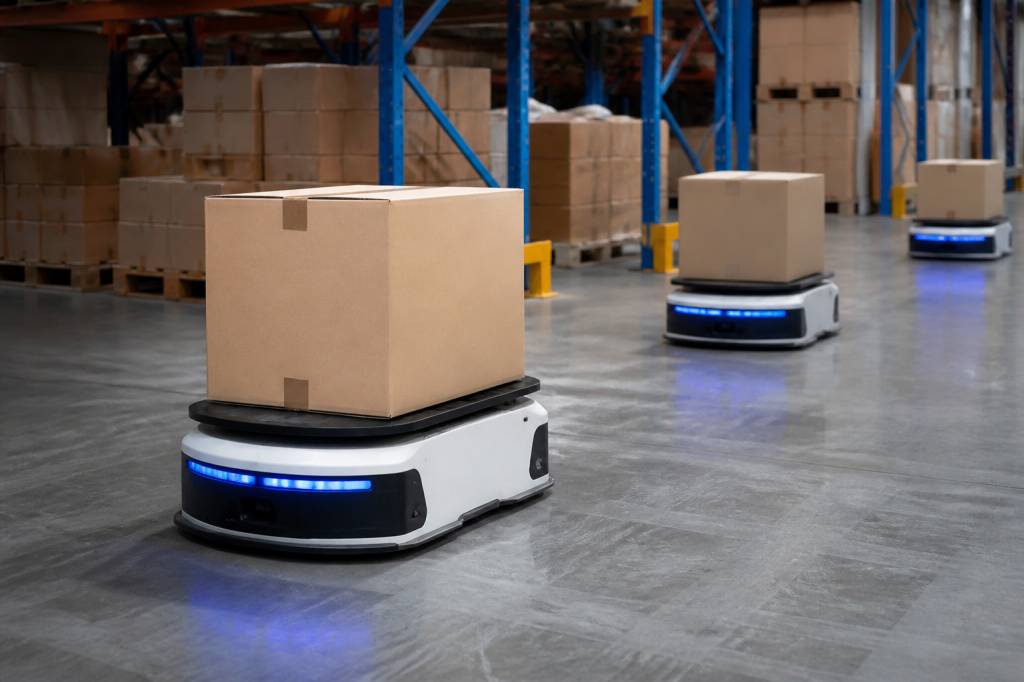
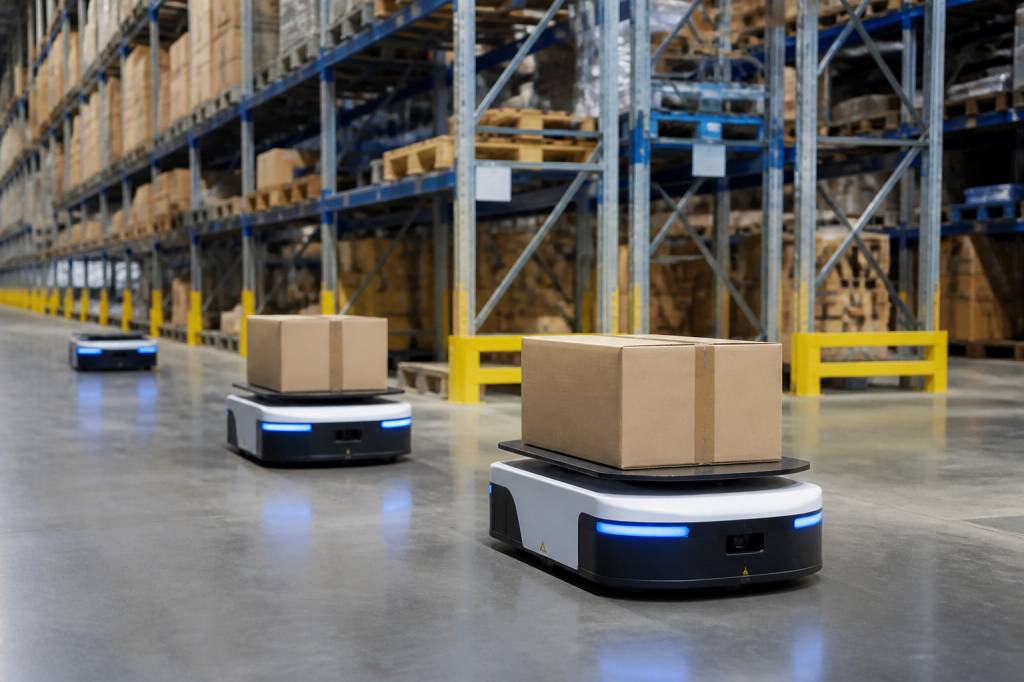
In a modern fulfillment center, for example, dozens or even hundreds of robots may move simultaneously. Some carry inventory. Others sort parcels. Others move pallets or support picking operations. If one robot gets blocked, the impact can cascade through the entire process. The system needs rapid optimization decisions, not just static plans.
This is where quantum optimization could become valuable. It may help logistics operators solve problems such as:
- Assigning robots to tasks with the lowest total travel time
- Reducing congestion in high-traffic warehouse zones
- Balancing workloads across robotic fleets
- Sequencing order fulfillment to minimize delays
- Coordinating human workers and robots more efficiently
These are not abstract use cases. They are operational pain points today. As robotic automation expands, the need for advanced optimization will only intensify.
Quantum Computing Use Cases in Logistics Operations
One of the strongest use cases for quantum computing in logistics is route optimization. Delivery networks often face thousands of possible route combinations, especially when time windows, fuel costs, traffic patterns, and vehicle capacities are all involved. Even high-performing classical solvers can struggle to find near-optimal solutions quickly when inputs change in real time.
Quantum algorithms may eventually help logistics companies re-calculate routes faster and more intelligently. This could be valuable in parcel delivery, cold chain logistics, freight forwarding, and urban distribution. A better route does not only save time. It can also reduce fuel consumption, lower emissions, and improve service reliability.
Another important area is warehouse optimization. Storage location decisions, picking sequences, and robot task assignments create a dense optimization challenge. The value of a quantum approach lies in exploring many possible configurations at once and identifying stronger solutions under tight operational constraints.
Potential applications include:
- Dynamic route planning for last-mile delivery fleets
- Cross-docking coordination
- Container loading optimization
- Warehouse slotting and inventory placement
- Predictive maintenance scheduling for automated equipment
- End-to-end supply chain risk modeling
How Quantum and Classical Systems Will Work Together
For the foreseeable future, logistics organizations will use hybrid computing models. That means quantum systems will not replace ERP platforms, WMS software, TMS tools, or robotic control systems. Instead, they will likely be introduced as specialized optimization engines that work alongside existing infrastructure.
This hybrid model makes sense. Classical systems are reliable, mature, and deeply integrated into daily operations. Quantum systems, by contrast, are emerging and best suited for certain problem types. A practical deployment may look like this: operational data flows from logistics systems into a quantum optimization layer, which returns improved routing, scheduling, or resource allocation recommendations.
The key is integration. Companies that prepare their data architecture now will be better positioned to adopt quantum solutions later. Clean data, standardized APIs, real-time visibility, and strong analytics capabilities will all matter. Without them, even the most powerful quantum algorithm will struggle to deliver value.
Barriers to Adoption in Quantum Computing for Logistics
Despite the excitement, several barriers remain. Quantum hardware is still developing. Error rates, qubit stability, and scaling limitations continue to shape what is possible. Many logistics applications also require near-instant decisions, and not every quantum platform can yet operate at the necessary speed or reliability.
There is also a talent challenge. Quantum computing requires specialized skills that many logistics teams do not currently have in-house. Data scientists, operations researchers, software engineers, and supply chain planners will need to collaborate more closely. New training programs may be necessary.
Other challenges include:
- Limited access to quantum hardware
- Unclear return on investment for early pilots
- Integration complexity with existing supply chain software
- Security and governance concerns around sensitive logistics data
- The need to identify business problems that are truly quantum-suitable
These obstacles are significant. They do not eliminate the opportunity. They simply mean adoption must be strategic rather than speculative.
Preparing Robotic Supply Chains for the Next Optimization Leap
Preparation should begin with data readiness. Robotic supply chains generate large volumes of operational data, including movement patterns, task duration, congestion points, picking accuracy, inventory states, and exception events. To benefit from quantum optimization in the future, organizations need structured, high-quality data that can support modeling and simulation.
They should also identify the most valuable optimization problems. Not every logistics issue requires quantum computing. Some problems are better solved with existing AI, machine learning, or traditional mathematical optimization. The best candidates are usually those with many variables, high complexity, and strong business impact.
Companies preparing for quantum logistics should consider the following steps:
- Map current optimization bottlenecks across warehouse and transport operations
- Audit data quality and system interoperability
- Test hybrid optimization approaches with classical solvers first
- Build internal expertise in operations research and quantum fundamentals
- Run pilot projects focused on route planning, scheduling, or fleet management
- Measure impact using cost, speed, accuracy, and service-level metrics
Robotic supply chains benefit most when optimization is continuous. A warehouse can be automated and still underperform if the underlying logic is weak. Better algorithms create better outcomes. That is why quantum readiness is not only about technology. It is also about process design, data discipline, and decision architecture.
The Role of AI, Digital Twins, and Quantum Optimization
Quantum computing will likely be most powerful when combined with other advanced technologies. Artificial intelligence can predict demand, detect anomalies, and learn patterns from historical logistics data. Digital twins can simulate warehouse and transport environments before changes are deployed. Quantum optimization can then search for the best solutions across those simulated scenarios.
This combination is especially promising for robotic supply chains. A digital twin can model robot traffic, storage constraints, labor availability, and delivery demand. AI can forecast what is likely to happen next. Quantum algorithms can then help determine the best move under those conditions. The result is a more adaptive and intelligent supply chain.
That kind of system could support:
- Autonomous warehouse reconfiguration
- Real-time fleet rebalancing
- Demand-responsive inventory positioning
- Proactive congestion avoidance
- Scenario-based disruption planning
Why Logistics Buyers and Decision Makers Should Pay Attention Now
Even if commercial quantum computing is still evolving, logistics executives, operations directors, and technology buyers should pay attention now. The reason is simple. Strategic advantage often comes from preparation before mainstream adoption.
Organizations that understand quantum computing in logistics early can make better technology decisions later. They can choose software partners more wisely. They can design cleaner data pipelines. They can structure robotic supply chains in ways that are more compatible with next-generation optimization tools.
For buyers considering automation products, robotics platforms, or logistics software, this matters. Vendors that understand quantum-ready architecture may be better positioned for the future. That does not mean every buyer needs a quantum roadmap today. It does mean long-term scalability should be part of the evaluation process.
In practical terms, the organizations best prepared for the next optimization leap will likely be those that combine operational maturity with technological curiosity. They will treat quantum computing not as a buzzword, but as a serious development in supply chain optimization, robotic coordination, and logistics intelligence.