


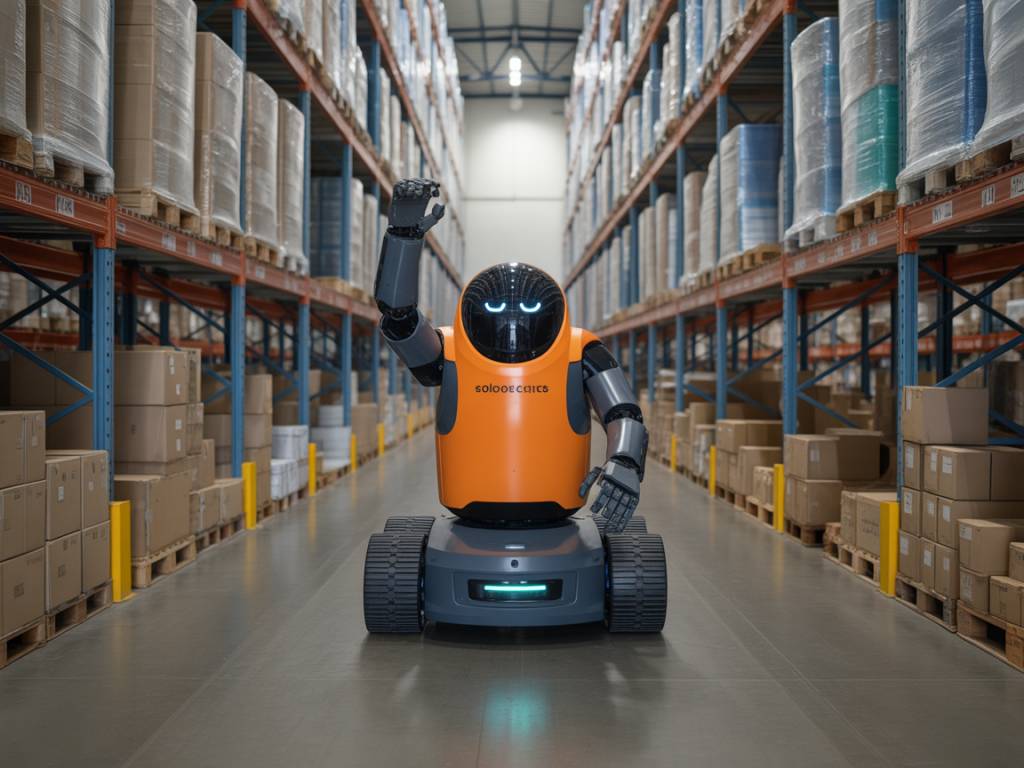
Why Cybersecurity Matters in Robotic Logistics and Automated Warehouses
Robotic logistics has moved from pilot projects to the core of modern supply chains. Autonomous mobile robots, automated storage and retrieval systems (AS/RS), IoT sensors, and AI-driven warehouse management systems (WMS) now orchestrate the flow of goods. Efficiency rises. Labor costs fall. Accuracy improves.
Yet every connected robot, sensor, and conveyor also represents a new digital doorway. Cybersecurity in automated warehouses and robotic supply chains is no longer optional. A single successful cyberattack can halt operations, corrupt inventory data, or even cause physical damage to equipment and infrastructure.
For logistics operators, 3PLs, retailers, and manufacturers, securing robotic logistics means understanding the unique intersection between IT security and operational technology (OT). It also means treating cybersecurity as a strategic investment, not a technical afterthought.
Key Cybersecurity Risks in Automated Warehouses and Robotic Supply Chains
Cyber risks in automated logistics environments differ from those in traditional office IT. They involve both digital and physical consequences. A hacked email account is problematic. A hacked fleet of robots is operationally critical.
Some of the most important threats include:
- Compromised robots and AGVs: Autonomous mobile robots (AMRs) and automated guided vehicles (AGVs) can be hijacked to move incorrectly, create collisions, or block key aisles.
- Ransomware attacks on warehouse management systems: WMS, WES (Warehouse Execution Systems), and ERP integrations are prime targets. If attackers encrypt or corrupt these systems, order fulfillment stops.
- Supply chain software tampering: Attackers may compromise software updates or third-party integrations, inserting malicious code into robotic control software or IoT platforms.
- IoT device vulnerabilities: Smart cameras, RFID readers, barcode scanners, PLCs, and environmental sensors often run outdated firmware and are poorly protected, making them easy entry points.
- Network intrusions into OT environments: Once inside a corporate network, attackers can pivot into operational networks that control conveyors, sorters, and industrial robots.
- Data manipulation attacks: Instead of stealing data, attackers may change it. Altered inventory information, location data, or routing instructions can silently damage service levels and customer trust.
These risks are amplified because robotic warehouses rely on real-time decision-making. Even brief disruptions ripple through the entire supply chain, impacting transportation, inventory positioning, and last-mile delivery.
Foundations of Cybersecurity for Robotic Logistics Systems
Securing robotic logistics and automated warehouse systems begins with core cybersecurity practices. Many organizations still lack these basics. Yet they form the backbone of any advanced cyber defense strategy.
- Asset inventory and visibility: You cannot protect what you do not know exists. Map all robots, PLCs, sensors, industrial PCs, WMS servers, and network components, including their firmware and software versions.
- Network segmentation: Separate IT and OT networks. Segment robotic systems, WMS, and IoT devices into dedicated zones with strict access controls and firewalls.
- Identity and access management: Enforce role-based access control (RBAC) for engineers, operators, and external vendors. Use strong authentication and avoid sharing accounts.
- Patch and update management: Robots, controllers, and IoT devices often run for years without updates. Set a clear, tested process for deploying security patches without disrupting operations.
- Encryption of data in transit and at rest: Protect communication between robots, WMS, and cloud platforms with secure protocols (TLS, VPNs). Encrypt sensitive operational data stored on servers and edge devices.
These measures may seem generic, but in the context of robotics and warehouse automation, they reduce the attack surface dramatically. They also prepare the ground for more specialized security controls tailored to industrial and logistics environments.
Securing Robots, Industrial IoT, and OT in Automated Warehouses
Robotic logistics depends on a dense web of operational technology. Securing OT and industrial IoT requires adapted approaches, because uptime, safety, and performance are as important as data confidentiality.
Key strategies include:
- Harden robotic controllers and PLCs: Disable unnecessary services, change default passwords, and restrict physical ports. Where possible, restrict programming interfaces to dedicated engineering stations.
- Secure communication protocols: Many industrial protocols (like Modbus, PROFINET, or older proprietary solutions) were not designed with security in mind. Use gateways, encryption tunnels, and network filters to protect them.
- Zero Trust for warehouse robotics: Do not assume any device is trusted by default. Each robot, camera, or conveyor controller should authenticate itself before accessing control systems or data.
- Monitor OT traffic: Deploy specialized OT network monitoring tools that understand industrial protocols and typical robot behavior. Anomalous commands or traffic patterns can indicate intrusions or misconfigurations.
- Secure remote access: Integrators and robot manufacturers frequently access systems remotely for maintenance. Use VPNs, multi-factor authentication, just-in-time access, and strong logging rather than permanent open connections.
By treating each robot and each OT device as a potential attack surface, logistics operators can introduce layered protections. The goal is not to create an impenetrable fortress, but to detect and contain issues quickly before they disrupt critical logistics processes.
Cybersecurity Strategies for Protecting End-to-End Supply Chains
Robotic warehouses do not exist in isolation. They connect to transport management systems, carriers, ports, suppliers, and customers. This connectivity accelerates flows, but it also expands the attack surface across the entire digital supply chain.
To protect end-to-end supply chains, companies should consider:
- Third-party risk management: Evaluate the cybersecurity posture of automation vendors, cloud providers, and logistics partners. Contracts should include clear security requirements and incident reporting obligations.
- Secure APIs and integrations: Modern supply chains rely on APIs to exchange orders, tracking data, and inventory positions. Implement authentication, rate limiting, input validation, and continuous monitoring on these interfaces.
- Data integrity controls: Use checksums, digital signatures, or blockchain-based solutions where appropriate to ensure that critical operational data has not been tampered with.
- Resilience and redundancy: Design robotic logistics systems with fallback modes. For instance, ensure that limited manual operations are possible during technology failures, or that secondary data centers can host WMS in emergencies.
- Incident response integrated with logistics planning: Cybersecurity incident response plans should explicitly cover warehouse operations, transportation, and supplier coordination, not only IT services.
As automated supply chains become more software-defined, the line between cybersecurity and operational continuity blurs. Cyber resilience becomes part of everyday logistics planning, just like safety stocks or alternative transport routes.
Practical Steps for Warehouse Operators and Logistics Managers
Many logistics professionals are not cybersecurity experts, yet they increasingly make technology investment decisions. They also manage relationships with robotics vendors and IT teams. A structured approach helps bridge this gap.
Some practical actions include:
- Map critical processes: Identify which automated flows are mission-critical (e.g., outbound order picking, cross-docking, returns processing) and prioritize their protection.
- Engage both IT and OT stakeholders: Build cross-functional teams that include warehouse managers, automation engineers, cybersecurity specialists, and procurement. Silos are the enemy of secure robotic logistics.
- Demand security by design from vendors: When purchasing robots, WMS, or IoT platforms, include cybersecurity requirements in RFPs. Ask about encryption, update mechanisms, certifications, and security roadmaps.
- Train staff on cyber-physical risks: Operators and supervisors should be able to recognize suspicious behavior, such as robots moving unpredictably or sudden system slowdowns after an email phishing campaign.
- Test response with realistic drills: Simulate cyber incidents that impact warehouse operations, not just office IT. For example, a ransomware scenario in the WMS or a suspected compromise of robot control software.
These measures help organizations move from reactive firefighting to proactive risk management. They also signal to partners and customers that security is taken seriously across the logistics value chain.
Emerging Trends in Cybersecurity for Robotic Logistics
As automated warehouses and robotic supply chains evolve, so do the tools and strategies used to secure them. Several emerging trends are shaping the future of cybersecurity in robotic logistics.
- AI-driven anomaly detection: Machine learning models analyze robot movement patterns, picking rates, and network traffic to detect subtle deviations that may indicate early-stage attacks or misconfigurations.
- Secure edge computing for robotics: More processing is happening at the warehouse edge, near robots and sensors. Secure edge platforms combine real-time analytics with built-in encryption, identity management, and tamper-resistant hardware.
- Standardization and best-practice frameworks: Industry consortia and standards bodies are working on reference architectures that blend IT security, OT security, and safety standards for automated warehouses.
- Digital twins for security testing: Virtual replicas of warehouses and robotic systems allow companies to test cyber-physical attack scenarios, safety impacts, and recovery strategies without disrupting real operations.
- Security as a differentiator: Vendors of warehouse robots, AMRs, and automation software increasingly market robust cybersecurity capabilities as a key selling point, responding to growing customer expectations.
For buyers and operators, staying informed about these innovations is not only a matter of risk mitigation. It is also an opportunity to select more resilient robotic logistics solutions and design future-ready automated supply chains.
Building Trust in Automated Warehouses and Cyber-Resilient Supply Chains
Automation and robotics are transforming how goods move from factory to consumer. They enable faster fulfillment, higher accuracy, and flexible operations. However, trust is the silent foundation on which these systems depend.
Trust that robots will follow safe paths. Trust that inventory data reflects reality. Trust that an automated warehouse will operate tomorrow just as efficiently as today. Cybersecurity provides the technical and organizational guarantees that support this trust.
By treating cybersecurity as a strategic component of robotic logistics design, businesses can protect their investments in automation. They can also reassure customers, partners, and regulators that innovation in warehouses and supply chains goes hand in hand with robust protection against evolving digital threats.