Robots in warehousing: how automation is transforming logistics operations
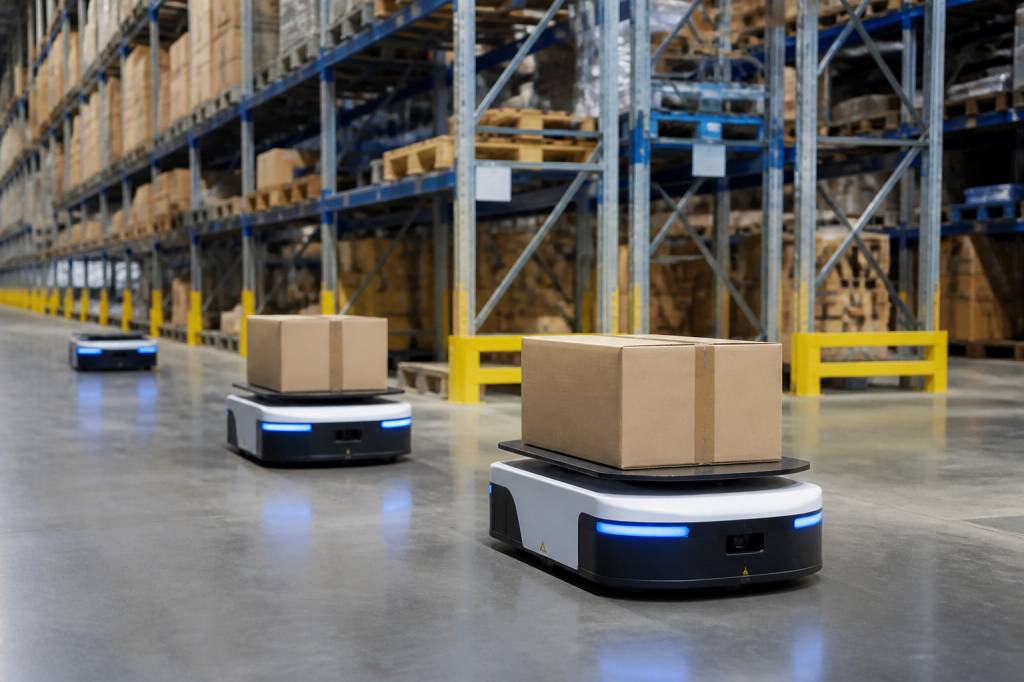
Walk into a modern warehouse today, and you may notice something quietly remarkable: the shelves are moving, the inventory is talking back, and the aisles are no longer ruled only by human footsteps. In many facilities, robots are not replacing the workforce so much as extending it, like a second pair of hands that never gets tired, never forgets, and never asks for a coffee break. That shift is changing logistics operations in ways that go far beyond simple task automation.
Warehousing has always been about precision under pressure. Orders must be picked fast, stock must be accurate, and space must be used wisely. Add labor shortages, rising e-commerce expectations, and global supply chain volatility, and the old playbook starts to feel heavy in the hand. Robots now offer a different rhythm: one where speed, visibility, and consistency can coexist.
Why warehousing was ready for automation
Warehouses have spent decades balancing three recurring tensions: more orders, less time, and tighter margins. If that sounds familiar, it is because it is. The rise of omnichannel retail, same-day delivery promises, and smaller order sizes has put traditional warehouse models under strain. A facility designed for pallet-in, pallet-out operations may struggle when dozens of individual orders arrive every minute.
At the same time, labor is not as easy to recruit or retain as it once was. Warehouse work can be physically demanding, repetitive, and highly sensitive to peak-season spikes. When the human workforce is stretched thin, errors rise and throughput falls. Automation entered the scene not as a flashy guest, but as a practical colleague.
Robots fit especially well in warehousing because many tasks are repetitive, structured, and measurable. Moving goods, identifying items, transporting totes, and sorting parcels are all activities that machines can perform with impressive consistency. That does not mean the human role disappears. Instead, people shift toward exceptions, supervision, planning, quality control, and problem-solving. The warehouse becomes less like a factory line and more like an orchestra, with robots keeping the tempo and humans conducting the performance.
What robots actually do inside the warehouse
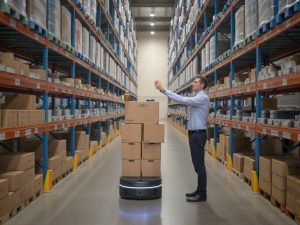
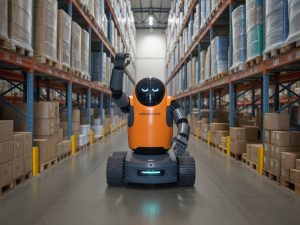
When people hear “warehouse robots,” they often imagine humanoid machines with blinking eyes and metallic arms. In reality, the most useful robots are usually less cinematic and much more practical. They come in several forms, each designed for a specific job.
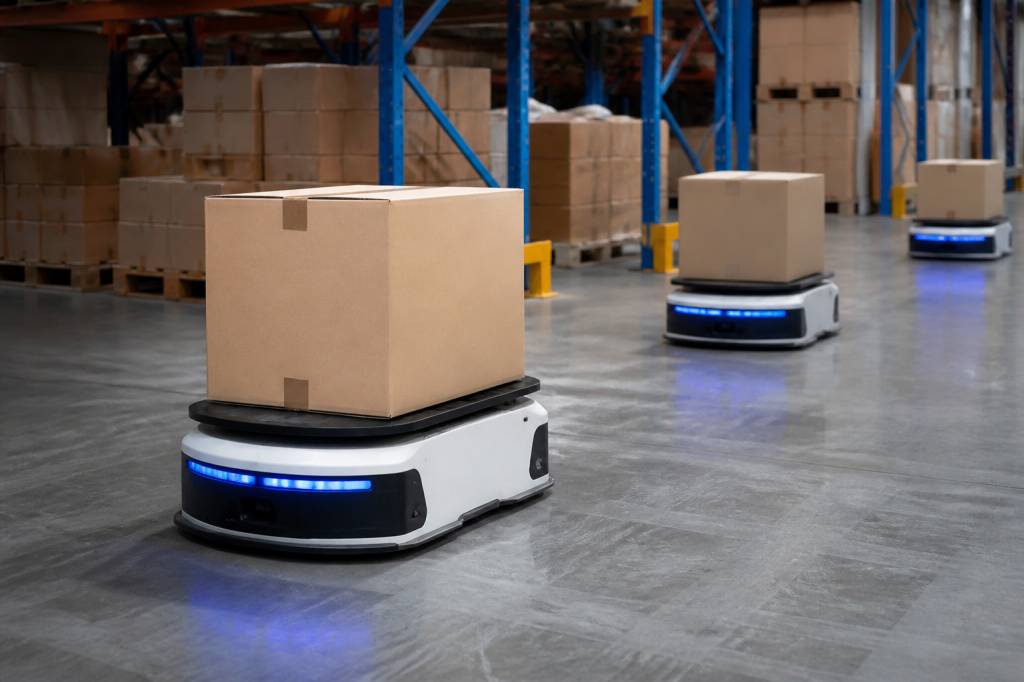
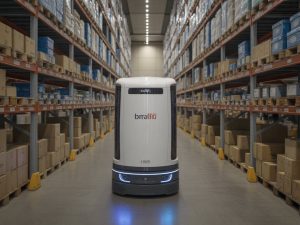
- Autonomous Mobile Robots (AMRs) move goods across the warehouse, navigating dynamically around people and obstacles.
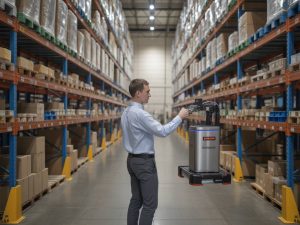
- Automated Guided Vehicles (AGVs) transport pallets or carts along predefined routes, often using magnetic tape, wires, or sensors.
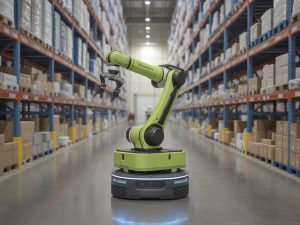
- Robotic arms handle picking, packing, sorting, and palletizing tasks with increasing dexterity.
- Goods-to-person systems bring inventory directly to workers, reducing walking time and improving pick rates.
- Automated storage and retrieval systems (AS/RS) store and retrieve items in dense vertical structures, making better use of warehouse space.
Each of these systems addresses a different bottleneck. AMRs reduce travel time. Robotic arms improve consistency in pick-and-place tasks. AS/RS systems compress inventory into smaller footprints. Together, they form a layered ecosystem where movement is more intentional and labor is used where it matters most.
Take order picking, for example. In a conventional warehouse, a picker may spend a large part of the day walking between locations. That is time not spent adding value; it is time spent traveling. By contrast, a goods-to-person system can bring the product directly to a workstation. The result is simple but powerful: fewer steps, fewer errors, and more orders processed per hour. A warehouse floor can start to feel less like a maze and more like a well-tuned circulatory system.
How automation is changing logistics operations
The most visible effect of warehouse robotics is speed, but that is only the surface. Underneath, automation is transforming logistics operations in several deeper ways.
Throughput becomes more predictable. Robots do not get slower after lunch, and they do not vary much from one shift to the next. This consistency allows warehouses to plan with greater accuracy. When throughput becomes predictable, downstream operations such as transportation scheduling, labor planning, and inventory replenishment become easier to manage.
Accuracy improves. Picking and sorting errors are expensive. A wrong item may trigger a return, a delayed shipment, or a disappointed customer. Robotics, combined with vision systems and warehouse management software, helps reduce these mistakes. The warehouse stops behaving like a game of telephone and starts acting like a disciplined relay team.
Space is used more efficiently. AS/RS and compact robotic systems allow companies to store inventory vertically and densely. In expensive industrial real estate markets, this matters. More storage in less space can delay expansion costs and improve inventory access. The warehouse footprint is no longer fixed by tradition; it becomes a design choice.
Labor is redirected, not erased. Automation is often described in terms of replacement, but in practice it tends to reassign human effort. Instead of spending hours walking, lifting, or repeating a simple task, workers can focus on supervision, troubleshooting, exception handling, and more complex coordination. In other words, the human brain is reserved for the moments when a brain is most useful.
Safety can improve. Moving heavy loads, working in high-density storage areas, and operating under time pressure can all raise the risk of injury. Robots can take on the most physically repetitive or hazardous tasks, reducing strain on employees. That does not eliminate safety responsibilities, of course, but it changes the risk profile in a meaningful way.
Where the business case becomes hard to ignore
Automation is not installed because it looks futuristic. It is adopted because the numbers start to make sense. The strongest business case usually appears when several pressures overlap: high order volume, labor scarcity, rising error costs, and a need to scale without endlessly adding floor space.
Imagine a fulfillment center that handles e-commerce orders with frequent small-item picks. Every day, workers spend a large portion of their time walking the aisles. If a fleet of AMRs can reduce that travel time, the warehouse gains output without having to add more staff in the same proportion. Productivity rises, but so does consistency across shifts.
Or consider a pallet-handling operation with strong seasonal peaks. AGVs can be introduced to carry loads between receiving, storage, and dispatch zones, smoothing the flow and reducing congestion. When demand jumps, the system can absorb more volume without the same strain on labor. It is a bit like giving the warehouse a set of tracks that keep traffic from turning into a traffic jam.
The return on investment is usually strongest when robotics addresses a clearly defined pain point. Warehouses rarely need to automate everything at once. In fact, the smartest projects often begin with one bottleneck: picking, transport, palletizing, or storage. That focused approach keeps the deployment manageable and helps teams see measurable gains early.
Integration with software is where the magic happens
A robot alone is impressive. A robot connected to the right software is transformative. This is where warehouse automation stops being a machine story and becomes a systems story.
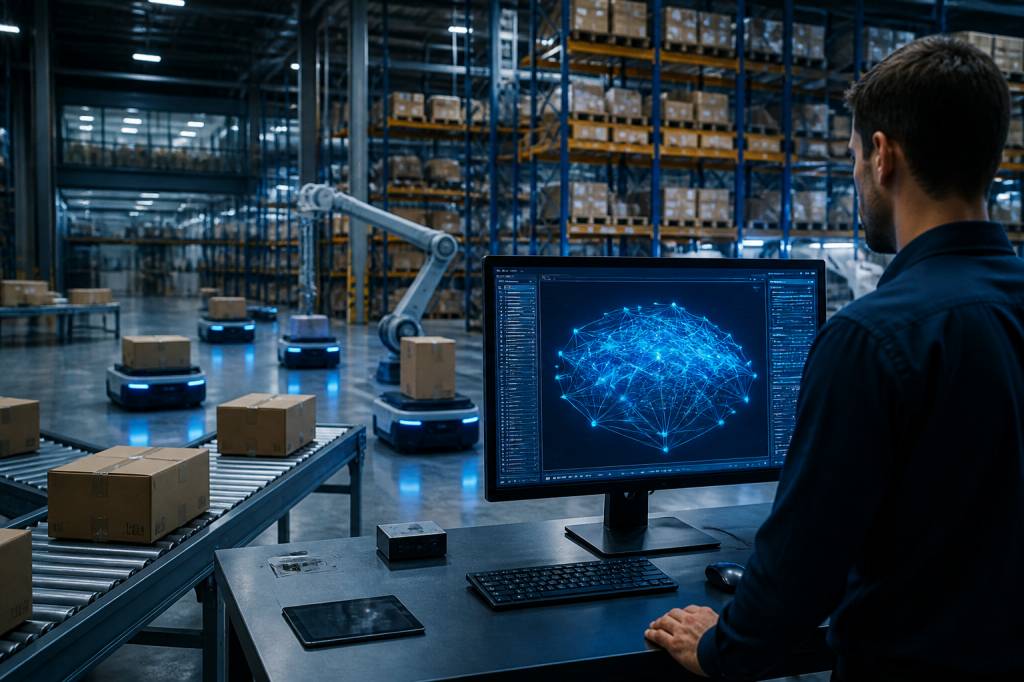
Robots typically work alongside a warehouse management system (WMS), warehouse control system (WCS), and sometimes an orchestration layer that coordinates tasks across different devices. The software decides what should move, when it should move, and where it should go. The robot becomes the body; the software becomes the nervous system.
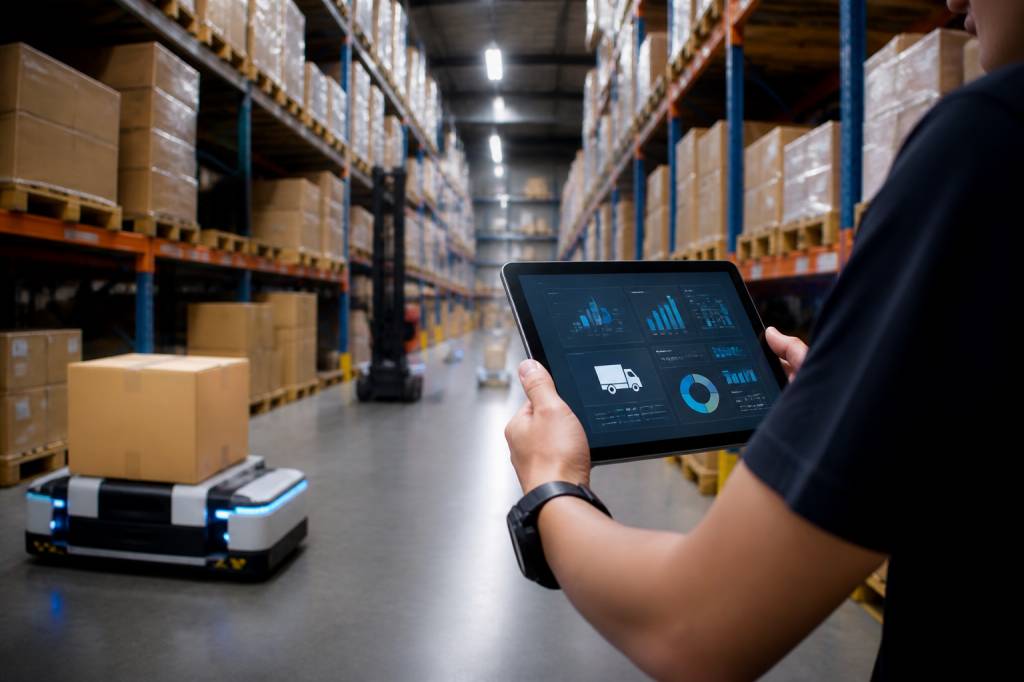
With real-time data, managers can track inventory levels, robot performance, task completion rates, and congestion points as they happen. That visibility matters because logistics is often won not by the fastest mover, but by the team that sees the problem first. If an aisle is blocked, a battery is low, or a picking zone is overloaded, the system can adapt before the issue spreads.
Some operations are also using AI-driven forecasting to align inventory placement with expected demand. Fast-moving items can be positioned closer to packing stations, while slower items are stored deeper in the facility. This reduces travel distances and improves responsiveness. In effect, the warehouse learns to arrange its shelves like a chessboard that anticipates the next move.
Human and robot collaboration on the warehouse floor
The best warehouse automation strategies do not ask whether humans or robots should win. They ask how each can do what it does best. Robots are excellent at repetition, precision, and endurance. Humans are better at judgment, adaptation, and managing the unexpected. Warehousing needs both.
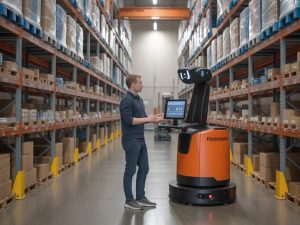
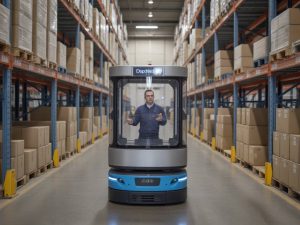
One of the most promising developments is collaborative operation. Workers may receive goods from an AMR, verify the contents, handle exceptions, and continue with the next task while the robot moves on. A robotic arm may palletize standard cartons while a human intervenes for fragile or irregular items. This creates a workflow where each participant handles the type of work most suited to its strengths.
This collaboration also changes the employee experience. Instead of walking miles a day or lifting the same box hundreds of times, workers can move into roles that are more analytical or supervisory. Training becomes important here. A warehouse that adopts robotics must also invest in people who can operate, monitor, and maintain the system. The technology is only as strong as the team behind it.
There is another benefit that is often overlooked: morale. Repetitive work can wear people down. When automation removes the most exhausting tasks, the warehouse becomes a more sustainable place to work. That does not solve every staffing challenge, but it can make a difference in retention and engagement. A warehouse that respects human energy usually gets more of it back.
Challenges worth taking seriously
For all its promise, warehouse robotics is not a magic wand. Automation projects can fail when they are treated as gadget purchases instead of operational redesigns. The most common challenges are surprisingly practical.
- Integration complexity: Robots must work with existing software, inventory processes, and physical layouts.
- Upfront investment: The hardware, software, and implementation costs can be significant.
- Change management: Teams need time to adapt, train, and trust the new workflow.
- Maintenance: Robots require upkeep, calibration, and monitoring to stay effective.
- Process redesign: A warehouse may need to rethink layout, storage logic, and task sequencing before automation delivers full value.
This is why pilot projects are often the wisest path. A controlled rollout allows teams to test the technology in a real environment without betting the warehouse on a single leap. It also gives operators the chance to learn what works in practice, not just in a sales demo that looks perfect under ideal lighting.
Another important point: not every warehouse needs the same level of automation. A high-volume parcel hub has different needs from a spare-parts distribution center. The right solution depends on product mix, order profile, labor availability, and growth trajectory. Automation should follow the business model, not the other way around.
What the next wave may look like
Warehouse robotics is still evolving, and the next phase will likely be even more adaptive. We are already seeing improvements in machine vision, AI planning, collaborative robotics, and multi-robot coordination. As these technologies mature, robots will become better at handling variability, not just routine.
That matters because warehousing is never perfectly uniform. Orders change, packaging changes, demand spikes, and supply disruptions arrive uninvited. The more flexible robots become, the more useful they are in real logistics environments. Think of them less as rigid machines and more as trained navigators, able to re-route when the map changes.
We may also see more modular automation: systems that can be deployed in stages, scaled up as volume increases, and moved or reconfigured more easily. For many businesses, this flexibility will be the deciding factor. They do not want a warehouse frozen into one operating model. They want a system that can grow with the business, or pivot when the market turns.
And perhaps that is the real story here. Robots in warehousing are not just speeding up operations; they are giving logistics teams a new kind of room to maneuver. In a sector where timing, accuracy, and resilience matter so much, that extra room can feel like oxygen.
When automation is introduced thoughtfully, the warehouse becomes more than a storage site. It becomes an intelligent engine, one where data, machines, and people work in a steady rhythm. The boxes still move, the orders still ship, but the choreography changes. And once you have seen a warehouse operate with that level of coordination, it is hard to imagine going back to the old dance.