Auto guide vehicle solutions for warehouse logistics and supply chain efficiency
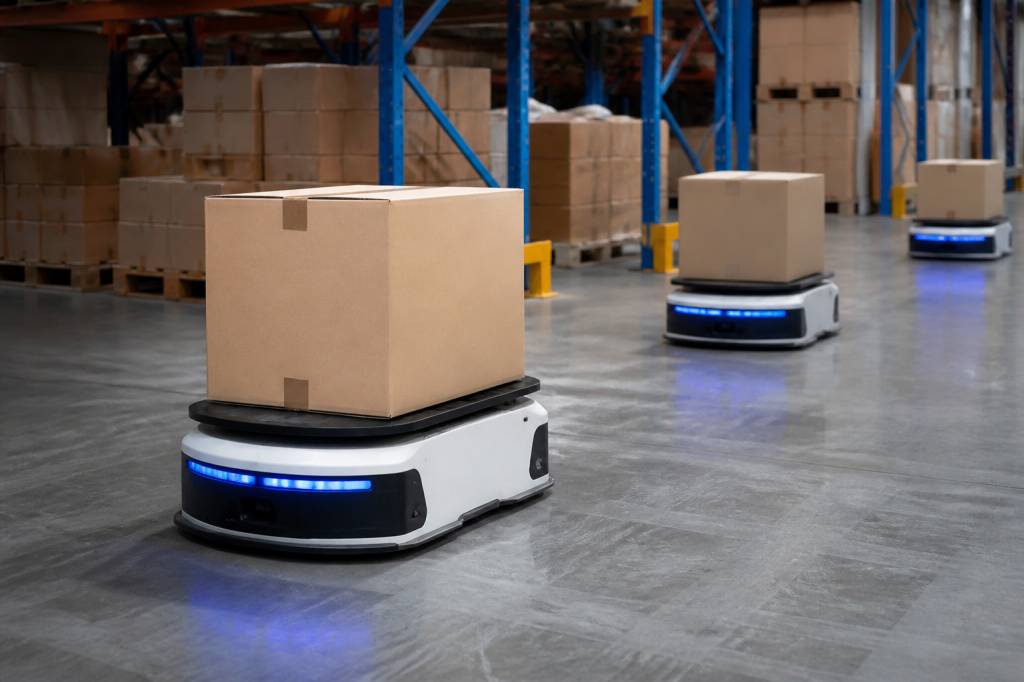
In a warehouse, time rarely makes noise. It slips between aisles, hides in waiting docks, and quietly disappears when forklifts are parked where they should not be. That is why auto guided vehicle solutions have become such a compelling part of modern warehouse logistics. They do not arrive with fireworks. They arrive with rhythm. And in a supply chain where every minute matters, rhythm is often more valuable than drama.
Autonomous and semi-autonomous guided vehicles are no longer futuristic curiosities reserved for high-tech facilities. They are now practical tools for moving pallets, bins, totes, and raw materials with consistency and precision. For operations teams under pressure to reduce delays, improve safety, and keep goods flowing, AGVs and their more advanced cousins, AMRs, can feel a bit like adding a new section to the orchestra: the music was already playing, but suddenly everything is more coordinated.
What are auto guided vehicles, exactly?
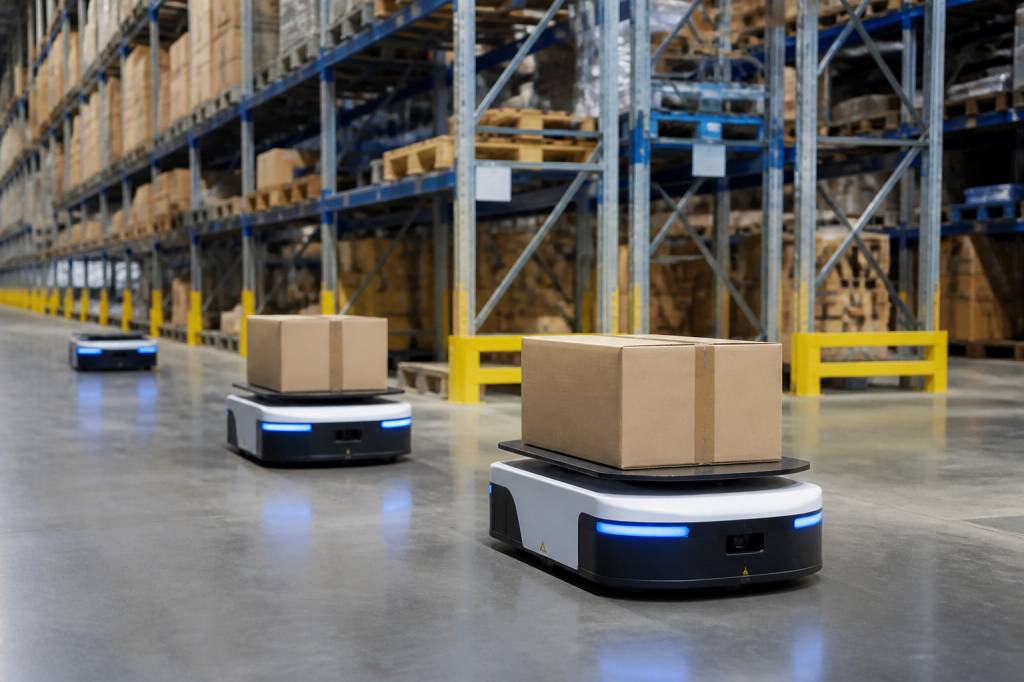
Auto guided vehicles, or AGVs, are driverless material handling systems designed to transport goods along predefined routes inside warehouses, factories, and distribution centers. They can follow magnetic tape, laser guidance, QR markers, embedded wires, natural navigation, or a combination of these technologies depending on the model and the environment.
Their role is straightforward: move items from point A to point B without human intervention. That may sound simple, but in logistics, simple is often revolutionary. Every repeated transport task that can be automated frees operators to handle work that requires judgment, flexibility, or speed of response.
It is useful to distinguish AGVs from AMRs, or autonomous mobile robots. AGVs usually follow fixed paths, while AMRs can interpret their surroundings and adapt more dynamically. In practice, both support warehouse logistics efficiency, but AGVs are often the ideal choice when material flows are highly structured and repeatable.
Why AGV solutions matter in warehouse logistics
Warehouse logistics is a world of movement. Goods arrive, are stored, picked, packed, staged, and shipped. Each step has a rhythm, and any disruption creates a ripple effect. When transport inside the warehouse becomes predictable and automated, the entire supply chain gains stability.
AGV solutions help warehouses solve a set of very familiar operational pains:
One of the most overlooked benefits is consistency. Humans are brilliant at adaptation, but repetitive hauling tasks can be tiring and prone to variation. An AGV does not get distracted by a noisy dock door or a long shift. It moves the same way each time, with the same timing, which makes downstream planning much easier.
Where AGVs deliver the most value
Not every warehouse needs the same solution. Some sites thrive with a small fleet moving pallets between receiving and storage. Others need more advanced networks linking production lines, packing stations, and cross-dock zones. The best AGV applications are usually the ones built around high-volume, repetitive, and predictable transport tasks.
Common use cases include:
A simple example: imagine a distribution center where pallets of fast-moving SKUs travel every hour from receiving to a buffer zone near the picking area. If a forklift driver must complete this loop manually dozens of times per day, you are spending labor on a task that does not require human decision-making. An AGV can absorb that routine movement while the human team focuses on exceptions, quality checks, and order accuracy.
How AGVs improve supply chain efficiency
Supply chain efficiency is not only about moving faster. It is about reducing friction. A smooth flow is better than a hurried one full of stops and restarts. AGVs improve efficiency by making internal transport more predictable, which has a surprisingly powerful effect on planning, labor allocation, and throughput.
Here are the main gains you can expect:
1. Better throughput
When internal transport becomes automated, goods move continuously instead of waiting for available labor or equipment. That continuity can increase throughput across the entire warehouse.
2. Lower labor pressure
AGVs are not a replacement for people, but they are excellent at absorbing repetitive movement. This helps operations teams address labor shortages and reduce the strain on employees performing physically demanding tasks.
3. Improved safety
Every warehouse manager knows that mixing pedestrians, forklifts, and tight time windows can be a delicate dance. AGVs reduce traffic volatility by following controlled routes and predictable behaviors.
4. More accurate execution
Because AGVs integrate with warehouse management systems and fleet control software, they can follow instructions with high precision. That improves delivery timing and reduces errors in internal transport.
5. Better space utilization
Some AGV systems can work in tighter or more structured pathways than conventional vehicles, which may help optimize layout and reduce unnecessary congestion.
The technologies behind the movement
AGV solutions have evolved significantly. The earliest systems were relatively rigid, but today’s platforms can be surprisingly intelligent. Depending on the vendor and application, a system may use one or more of the following navigation methods:
The choice of navigation method depends on the warehouse environment, the required flexibility, and the level of change expected in the layout. A site with stable traffic lanes and limited reconfiguration may benefit from a simpler guided system. A warehouse that changes often may need more adaptive navigation.
Just as important as navigation is fleet management software. This layer coordinates vehicles, assigns tasks, balances traffic, and helps avoid bottlenecks. If the AGVs are the muscles, the software is the nervous system. Without it, even the best vehicles can end up waiting politely for instructions like actors on a stage with no script.
Key operational considerations before deploying AGVs
AGVs are powerful, but they are not magical. A successful project begins with a clear understanding of the processes you want to automate. The most effective deployments are designed around the warehouse’s actual flow, not around an abstract idea of automation.
Before implementation, it helps to review these points:
One practical lesson from many warehouse projects is that automation works best when the process is already disciplined. If your goods flow is chaotic, an AGV will not fix that chaos by itself. It will simply transport the chaos more efficiently. First tidy the road, then let the vehicle run.
AGVs and warehouse safety: a quieter, cleaner traffic pattern
Safety is one of the strongest arguments for AGV adoption. Forklifts remain essential in many facilities, but they also introduce risk when traffic grows dense or when routes intersect with foot traffic. AGVs offer a controlled alternative for repetitive transport, especially in zones where predictable movement is a priority.
Modern systems include sensors, emergency stop functions, obstacle detection, and route controls that help prevent collisions. When properly configured, AGVs can reduce the burden on human operators and improve overall site discipline.
Still, safety is not only a matter of technology. It also depends on training, signage, process design, and ongoing supervision. A warehouse is a living ecosystem, and every new machine changes the choreography. Clear communication with the team matters as much as the hardware itself.
Integration with the wider supply chain
The real value of AGV solutions becomes even clearer when they connect smoothly with other digital systems. In warehouse logistics, automation should not sit in a corner like a beautiful but isolated machine. It should exchange data, receive instructions, and support wider planning decisions.
When AGVs are integrated with a warehouse management system, they can respond to real-time priorities such as inbound urgency, order cutoff times, or production schedules. When tied to ERP or MES systems, they can support more synchronized movement between inventory, manufacturing, and shipping.
This matters because supply chain efficiency is rarely won in a single step. It comes from aligned decisions across procurement, storage, production, and distribution. An AGV can help remove one layer of delay from that chain, and in logistics, one removed delay often becomes several gained advantages.
What types of businesses benefit most?
AGV solutions are not limited to giant fulfillment centers. They can be valuable in a wide range of operations where the movement of goods is repetitive and structured.
Typical beneficiaries include:
Industries with high traceability requirements often appreciate AGVs because they support disciplined workflows and digital tracking. In food, pharma, and automotive environments, that combination of reliability and traceability can be especially powerful.
How to measure the impact of an AGV project
A good automation project should be measurable. Otherwise, it becomes a nice story instead of a business improvement. Before and after deployment, it is smart to monitor key performance indicators that reflect both operational and financial impact.
These indicators help show whether the AGV solution is truly improving warehouse logistics or simply moving the same items with a more sophisticated accent. The difference matters.
Looking ahead: from automation to orchestration
The future of AGV solutions is not just more vehicles. It is smarter orchestration. Warehouses are moving toward ecosystems where humans, robots, software, and data collaborate in near real time. The goal is not to erase human work, but to make it more meaningful, less repetitive, and better supported by technology.
In that future, the warehouse becomes less like a warehouse in the old sense and more like a synchronized network of decisions. Vehicles know where to go. Systems know what matters now. Operators know where their attention adds the most value. And the whole operation gains something precious: flow.
If your warehouse still relies heavily on manual transport for predictable movements, it may be time to look more closely at auto guided vehicle solutions. The best systems do more than move pallets. They clear the path, reduce friction, and give your supply chain a steadier pulse.
And in logistics, a steady pulse is often the difference between a warehouse that merely works and one that works beautifully.